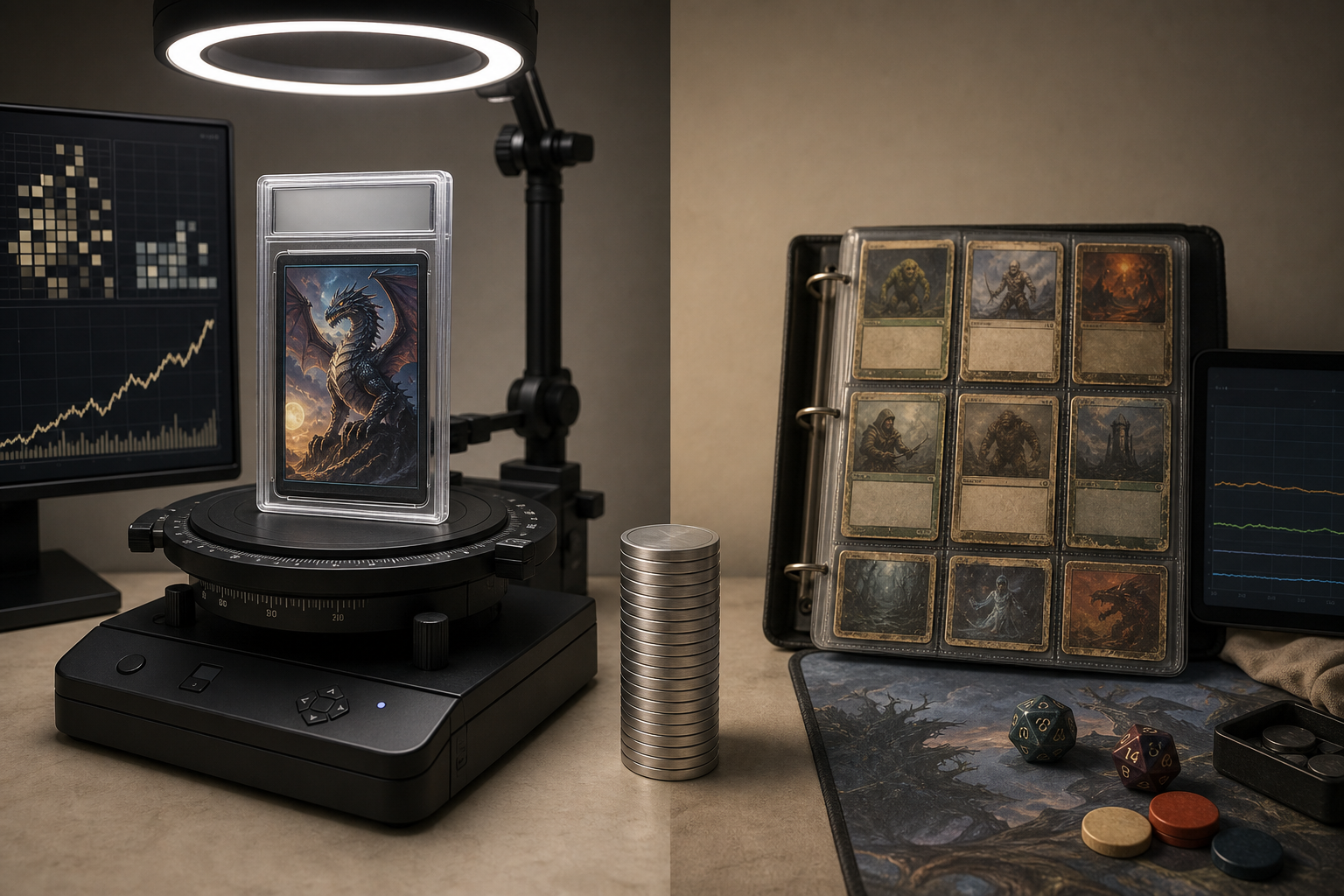
Grading isn’t right for every card. Here’s an honest guide to when it pays off and when it doesn’t — so you spend your money where it counts.
When grading is worth it
- You plan to sell. A sealed, verified grade removes a buyer’s biggest worry — condition — and graded cards typically command more than raw equivalents, especially near the top of the scale.
- The card is valuable or rare. The higher the value, the more a guaranteed condition and a tamper-evident slab protect it.
- You want to protect a favourite. A slab keeps a card in fixed condition, safe from handling, humidity and light.
- You want proof, not opinion. A grade backed by measurement gives you a permanent, verifiable record of condition.
When it might not be
- Low-value commons where the fee is more than the card is worth.
- Visibly damaged cards — creases, heavy whitening or surface loss grade low, and a low grade rarely adds value.
- Cards you’ll keep loose and play with — if it’s never leaving your binder, a slab may not be the point.
The maths
At £25 per card for standard grading, the question is simple: does a verified grade add more than £25 of value or confidence? For a card you’re selling, insuring or keeping long-term, it usually does. For a bulk common, it usually doesn’t. Our cost breakdown has the full pricing.
Not sure what to grade?
A good rule of thumb: grade the cards you’d be annoyed to lose value on. Still deciding? Start with your best one or two and see the report for yourself. Start your order →