News
Guides and updates on physics-based card grading.
40 articles total
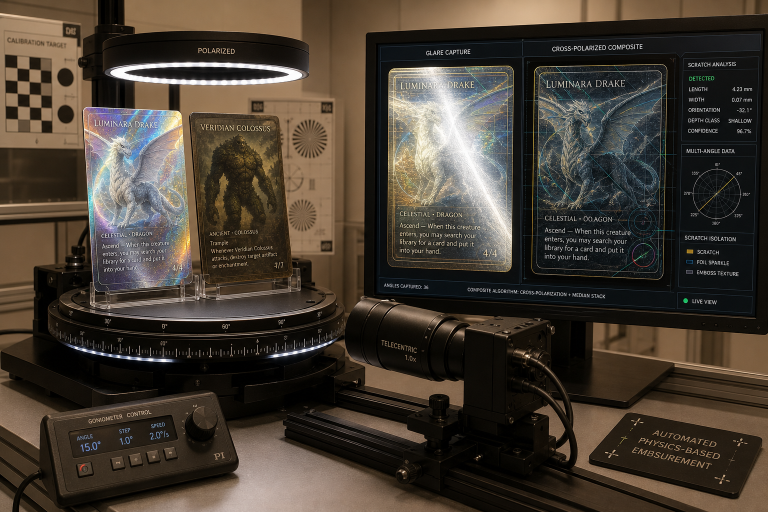
Why holographic and textured cards are the hardest to grade
Holo, reverse-holo and textured cards are the hardest to grade consistently — the very shine that makes them desirable is what hides scratches and fools the eye. Here's why, and how measurement…
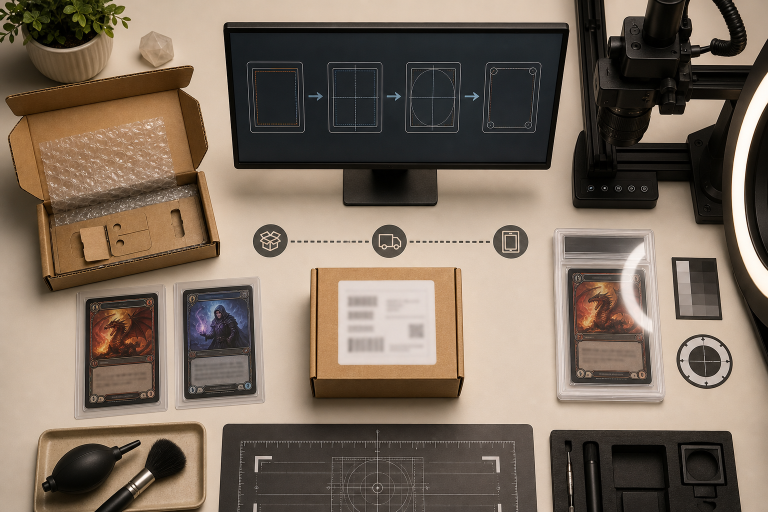
First time grading? A beginner’s guide to getting started
New to card grading? This beginner's guide walks you through what grading is, what it costs, and exactly how to get your first card graded.
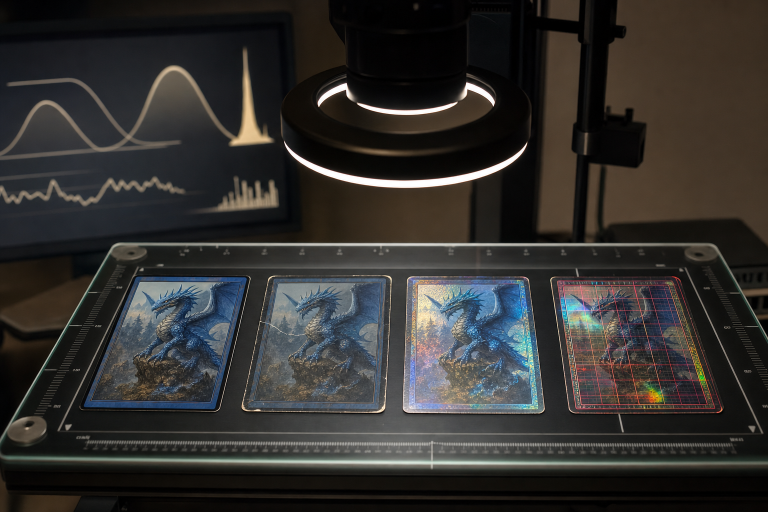
What affects a trading card’s value?
Why is one card worth £5 and a near-identical one worth £500? Here's a plain guide to what actually drives a card's value.
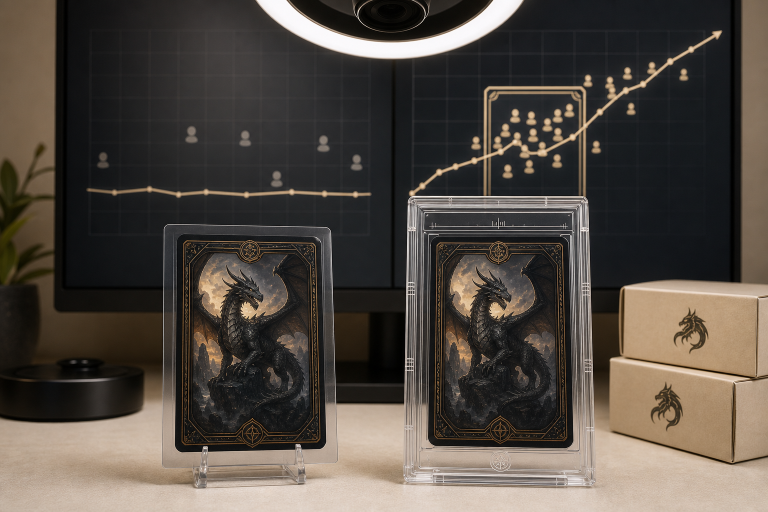
Grading for sellers: how a grade helps you sell
Selling cards on eBay, Whatnot or Vinted? Here's how a verified grade can widen your buyer pool and lift your price.

How long does card grading take?
Grading timelines vary hugely. Here's what affects turnaround — and why grading in the UK can mean days rather than weeks.
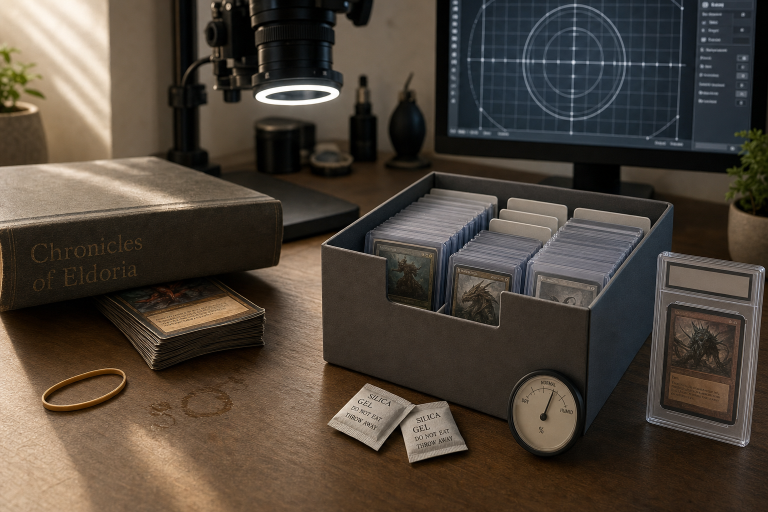
How to store your cards to keep them mint
Condition is everything in grading. Here's how to store and handle your cards so they stay mint until you're ready to grade.
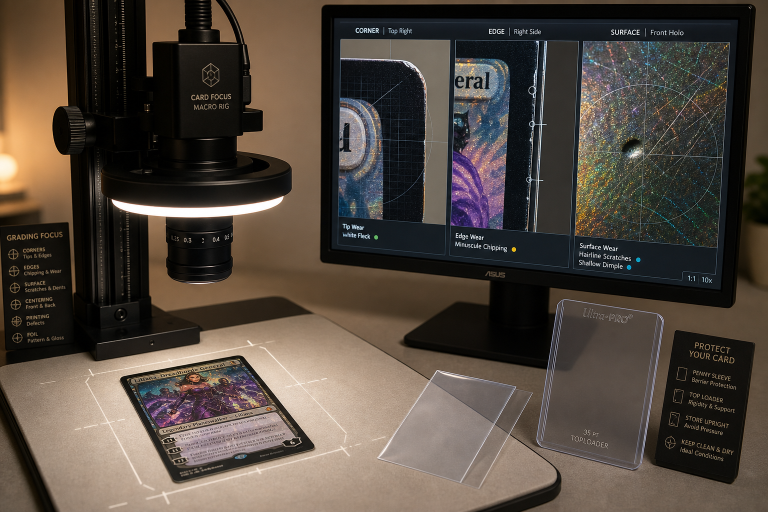
Corners, edges and surface: the wear that decides a grade
Centering is fixed at the cut, but corners, edges and surface are where handling shows. Here's what graders measure and how to protect them.
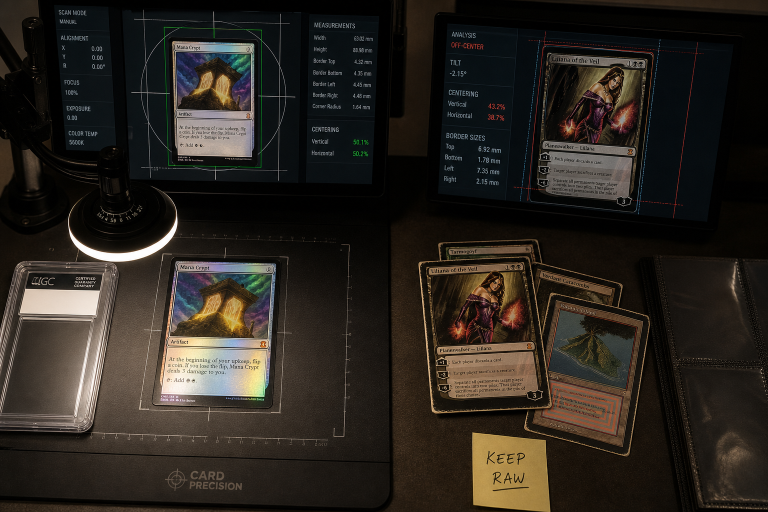
Which of your cards are worth grading?
You don't need to grade your whole collection. Here's how to pick the cards where grading actually adds value.
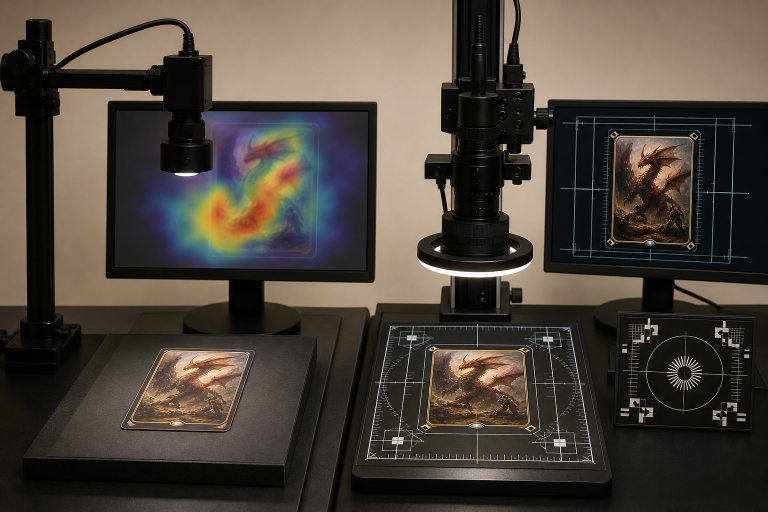
AI grading vs physical measurement: what’s the difference?
AI graders predict a grade from photos. Measurement-based grading measures the card. Here's why the distinction matters for your cards.
What is a tamper-evident slab — and why it matters
The slab does more than protect your card. Here's what 'tamper-evident' means and why it's central to trusting a grade.