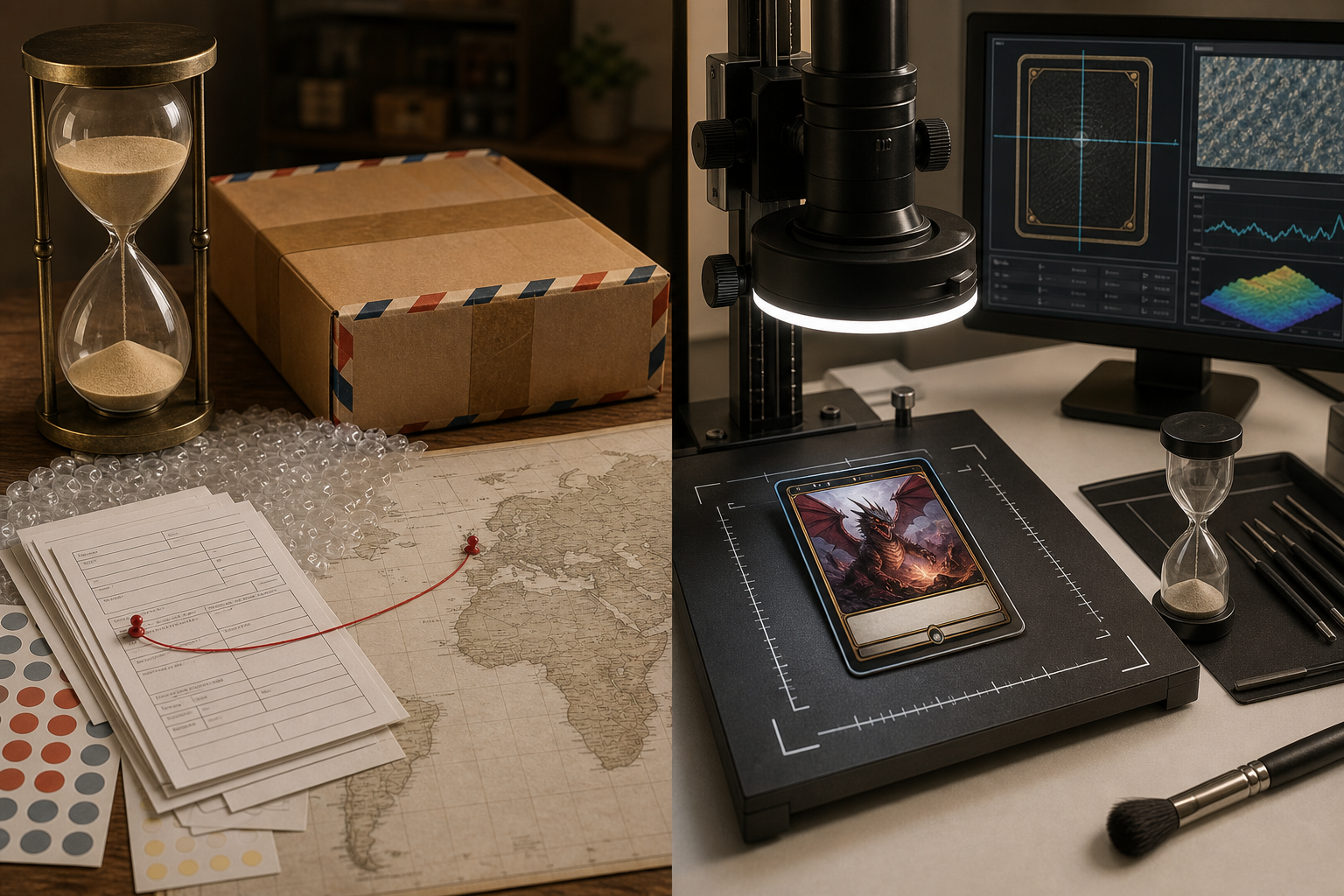
For years, getting a card graded to a recognised standard meant shipping it to the United States and waiting. That’s changing. Here’s how grading in the UK compares to sending your cards overseas.
The cost of going overseas
Sending cards to a US grader means international postage both ways, paying in dollars, potential customs charges, and the risk of a valuable parcel crossing the Atlantic twice. The grading fee is only part of the real cost.
The time
International shipping plus overseas queues can mean weeks — sometimes a couple of months — before a card comes home. Grading domestically removes the transit time entirely. CALIBRE’s standard turnaround is 7 days from receipt.
The approach
There are three broad approaches to grading: human graders assigning a grade by eye, AI models predicting a grade from photos, and physical measurement. CALIBRE measures the card — centering, corners, edges and surface — with sensors, so the same card produces the same grade every time, with a full report behind it. We break the categories down in our market comparison.
When does overseas still make sense?
If you specifically need a particular label for a particular market, that’s a valid reason to ship overseas. But for most UK collectors who want an accurate, verifiable grade without the cost, customs and wait, grading at home is simply more practical.
The bottom line
Grading in the UK means no customs, no currency conversion, no weeks in transit, and a card that never leaves the country. Start your order →