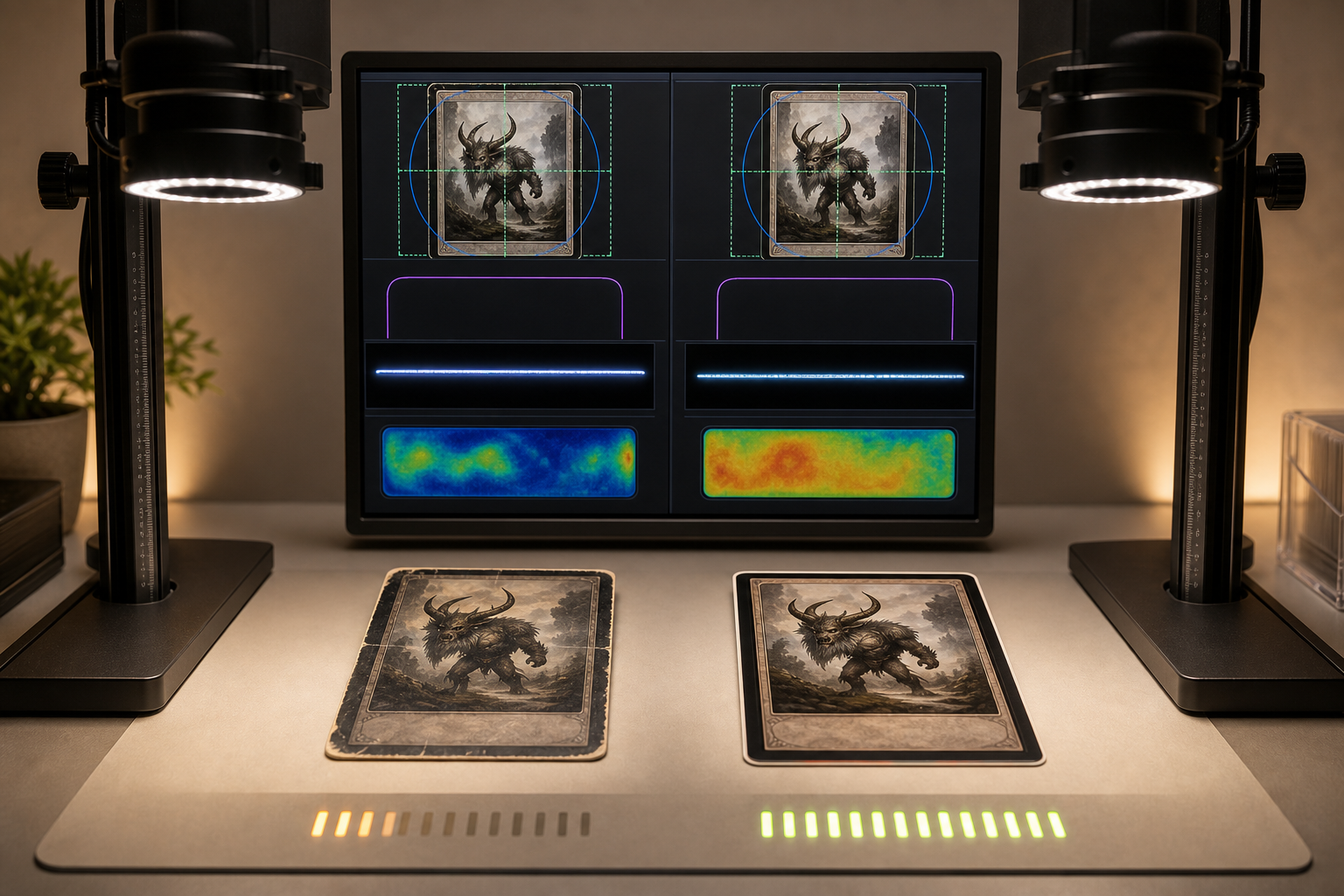
Card grades run on a 1–10 scale, but what do the numbers actually mean? Here’s a plain-English guide to the grading scale and the terms you’ll see on a slab.
The 1–10 scale
A grade is an assessment of a card’s physical condition. Higher is better; a 10 is as close to flawless as a card gets, while low numbers reflect heavy wear or damage. In broad terms:
- 10 — Gem Mint: virtually perfect. Sharp corners, clean edges, flawless surface, near-perfect centering.
- 9 — Mint: excellent, with only the slightest imperfection on close inspection.
- 7–8 — Near Mint / Excellent: light wear — minor edge or corner softness, or slightly off-centre.
- 4–6 — Lightly to moderately played: noticeable wear, whitening or surface marks.
- 1–3 — Heavily played / poor: significant damage, creasing or surface loss.
What “Gem Mint” really means
“Gem Mint” is the headline collectors chase, and it’s stricter than “Mint.” A Gem Mint card has to be excellent across every factor at once — there’s nowhere to hide a soft corner or a print line.
The four things behind every grade
- Centering — how evenly the design sits within the borders, front and back.
- Corners — sharpness, and any whitening or rounding.
- Edges — cleanliness, and any chipping or wear.
- Surface — scratches, print lines, dimples or indentation.
The lowest factor tends to limit the overall grade — a perfect card with one soft corner isn’t a 10.
Why measurement matters
Two human graders can look at the same card and disagree. CALIBRE measures each factor physically, so the grade is repeatable: the same card produces the same grade every time, and the full measurements are in your report. See how it works, or browse real graded cards in the registry.